
Finding a Way Forward in Central Park
A Spectacular Addition

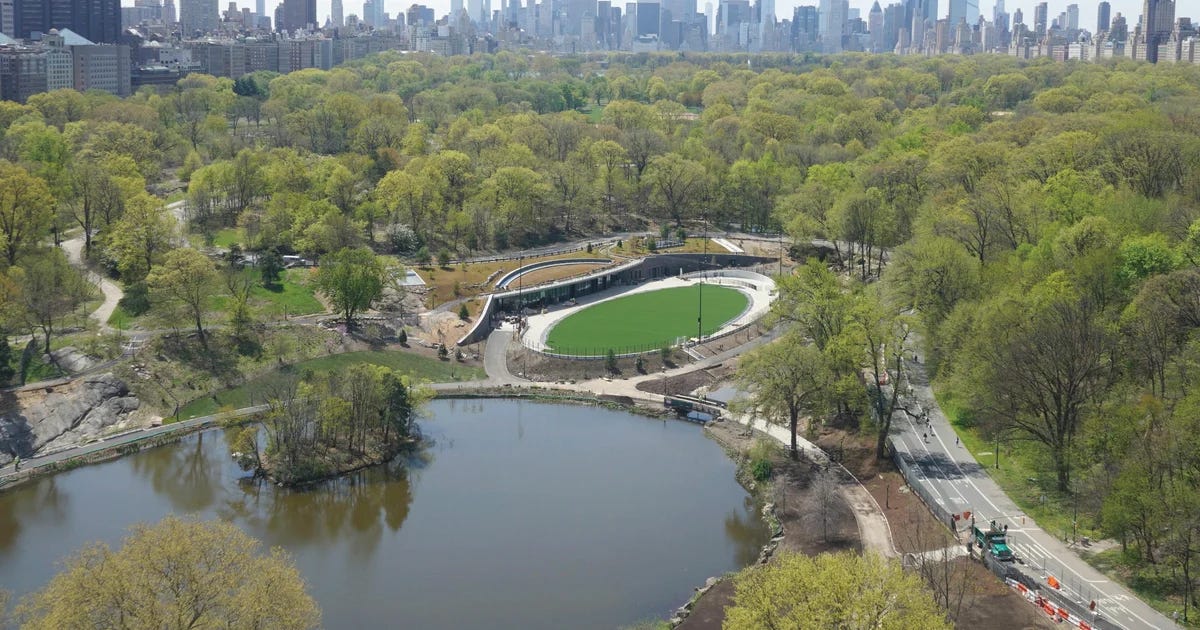
The New York Times is a minefield these days. But it’s worth it for pieces like “A Stunning New Pool in Central Park Helps Heal Old Wounds,” which describes the completion of the new Davis Center in Central Park. The Davis Center resurrects a neglected part of the park’s North end, including a new swimming pool, skating rink and pavilion. Michael Kimmelman, the Times’ architecture critic, loves the project, calling it “spectacular.”
CBS News.com
But he also uses the occasion to put it in the context of the shifting fortunes of Central Park and its place in the history of New York. He describes the ups and downs of the park from its creation in the mid-19th century, through its permutations in the 20th – from Hoovervilles in the ‘30s to demonstrations in the ‘60s, to Robert Moses concretization, decline during the 1970s fiscal crisis, and the renaissance of the Park in the last 30 years.
I’ve lived near Central Park for decades, so I witnessed the Park’s evolution over that time. But when you’re living day to day in the middle of events and changes, you don’t notice what becomes clear only in future assessments.
1970s New York, including the Upper West Side where I live, was supposedly a hellhole of drugs and crime. But I never walked around in fear, and I saw it as a great place. I used the park for many things, like playing the guitar for ad hoc audiences on Literary Walk and Bethesda Fountain. Or while jamming with a friend near the Sheep Meadow meeting a guy who recruited me to play in shows he organized at hospitals, halfway houses and other institutions over the next 40 years.
Living near the lower part of the park, I didn’t spend much time in the North end until the 2000s, when I took my kids skating at the Lasker pool (which closed during the Pandemic). So I only had secondhand knowledge of the atmosphere there in 1989, when the “Central Park Jogger” incident happened. The Times piece mentions this also -- a horrible crime, an atmosphere of fear, unjust convictions of the “Central Park Five,” and their exonerations.
The “spectacular” Davis Center provides an optimistic bookend to that era, and the Times article concludes by quoting one of the Five, who is now a City Councilman:
In this case we should receive the goodness, because when you give yourself the opportunity to participate in something good, you give yourself permission to live a full life — to find a way forward.
Finding a way forward is essential now, and we welcome any signs of that, especially great things like the renaissance of a neglected part of Central Park.
Thanks Peter. I enjoyed reading this piece.